
Trong Vu 01/07/2025 OpinionFollow en.baoquocte.vn (WVR) onTranslated by Thai Nguyen
WVR – Recently, sharing his thoughts with The World & Vietnam Report, Dr. Tran Hai Linh – a member of the Central Committee of the Vietnam Fatherland Front and an overseas Vietnamese entrepreneur in Republic of Korea – expressed his belief that with a sound strategy, strong political will, and the support of the people, Vietnam is fully capable of building a modern, efficient, and people-centered model of governance.
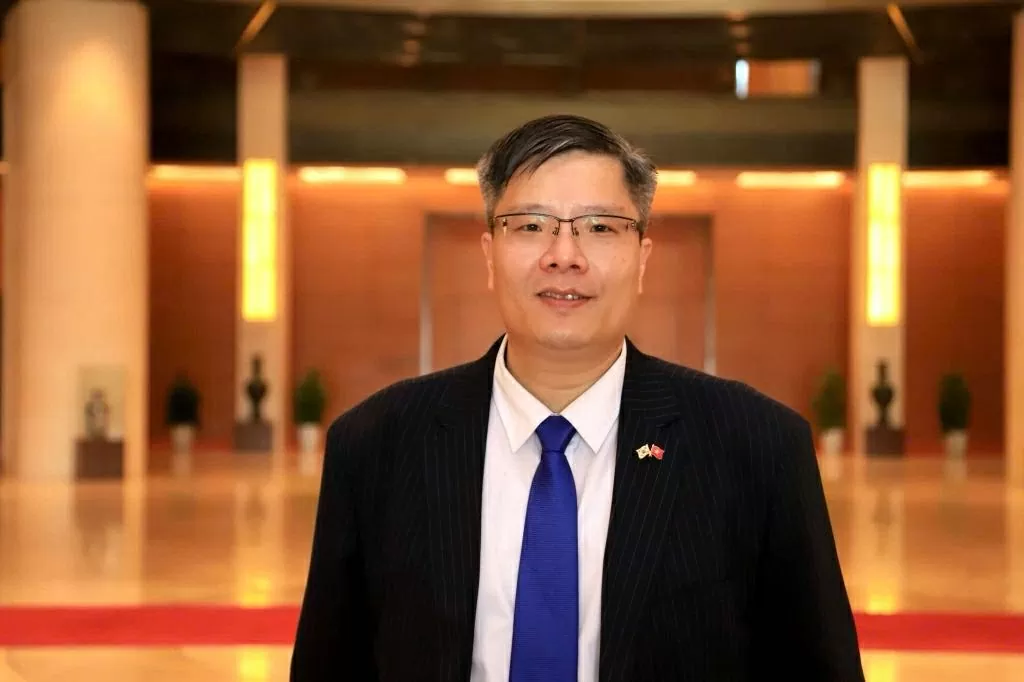
Dr. Tran Hai Linh – a member of the Central Committee of the Vietnam Fatherland Front and an overseas Vietnamese entrepreneur in Republic of Korea. (Photo: WVR)
In his talks, Dr. Linh praised the current policy of merging provinces and cities and reorganizing local government toward greater efficiency.
“From the perspective of someone who has been away from the homeland for many years but continues to closely follow every step of the country’s development, I believe this is a right, necessary, and timely decision that aligns with today’s development requirements”, said Dr. Linh
First, he went on, this is an important step toward streamlining the administrative apparatus, reducing redundancy and overlap in management, thereby improving the effectiveness and efficiency of government operations at all levels. A leaner system allows for faster, more practical, and more easily implemented policy decisions.
Second, the merger and reorganization of local governments open up significant opportunities to restructure development spaces and reallocate resources, thereby maximizing the potential and strengths of each region and locality.
This move is especially crucial as Vietnam intensifies international integration, attract investment, and strive for sustainable development, he emphasized.
“Third, I believe that if the restructuring is carried out carefully, scientifically, with a clear roadmap, and accompanied by public communication efforts to build social consensus, it will lay the foundation for establishing a modern administrative and governance system that serves the people and businesses more effectively, ” he affirmed.
He noted that alongside these advantages, the process will also bring about numerous challenges, requiring strong political determination, coordinated action across the entire political system, and the consensus and support of the public. “But with our tradition of unity, spirit of innovation, and commitment to the common good, I am confident that Vietnam will successfully implement this policy, contributing to building a more prosperous and civilized nation”, he said.
Dr. Linh expressed his belief that the merger of provincial-level administrative units and the transition from a three-tier to a two-tier government model is a major reform step with profound impacts on the country’s socio-economic development—including in remote areas and regions of interest to overseas Vietnamese communities.
Such mergers will create larger administrative units with stronger resources, thereby enhancing competitiveness and attracting investment, especially in large-scale infrastructure, industrial, and high-quality service projects. Localities formed after the mergers will have greater opportunities for coordinated planning and more effective regional development.
According to him, for remote and mountainous regions, if the administrative restructuring is implemented appropriately, it will help streamline the apparatus, reduce intermediary layers, and narrow the distance between the government and the people. With the application of digital technologies, public administrative services can also be delivered more quickly and conveniently, even in difficult-to-access areas.
However, it is crucial to have specific policies to ensure the rights, access to public services, and infrastructure development in these localities, avoiding the risk of being left behind.
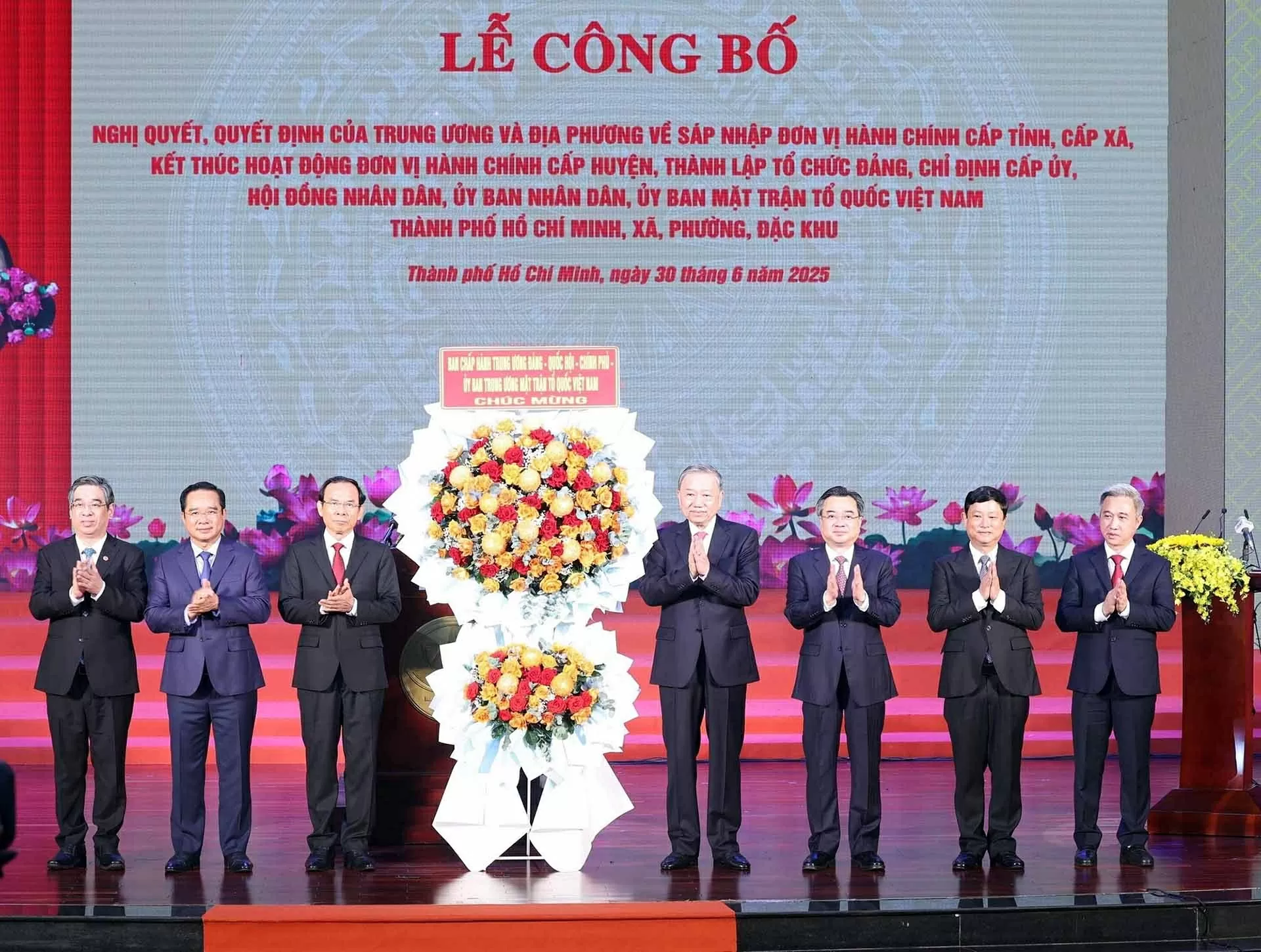
Party General Secretary To Lam at the launching ceremony in newly-formed Ho Chi Minh City. (Photo: VNA)
The merger, by forming larger administrative units, will also lead to the creation of new development hubs, making it easier for overseas Vietnamese to identify destinations for investment, cooperation, and contributing to their homeland, Dr. Linh elaborated.
If the government apparatus becomes leaner, more transparent, and more effective, it will strengthen trust and create more favorable conditions for overseas Vietnamese to engage more deeply in the country’s economic and social activities.
That said, the restructuring process must be designed and implemented in a scientific and humane manner, tailored to the cultural and social characteristics of each region. Urban criteria cannot be applied to mountainous areas, and a one-size-fits-all model cannot be used nationwide. Gathering input from citizens, overseas Vietnamese, and stakeholders is essential to ensure consensus and the sustainability of the transition.
If carried out in the right direction, he noted, this will be a breakthrough administrative “restructuring” that helps create new momentum and capacity for more comprehensive and inclusive socio-economic development.